The PS meaning in text is something many people search for after seeing it at the end of a message and wondering what it actually stands for.
You might spot “PS” in a WhatsApp chat, Instagram caption, email, or even a dating app message.
While it looks simple, PS can carry different meanings depending on the context, tone, and platform.
Originally linked to letter writing, PS has evolved into a flexible text expression used for reminders, afterthoughts, emphasis, or even playful additions.
Because texting is fast and informal, people often use PS without explaining it—leaving others confused.
This article explains the meaning of PS in text clearly, explores its origins, shows how it’s used across platforms, and helps you understand when and how to respond naturally.
Meaning & Definition of PS in Text
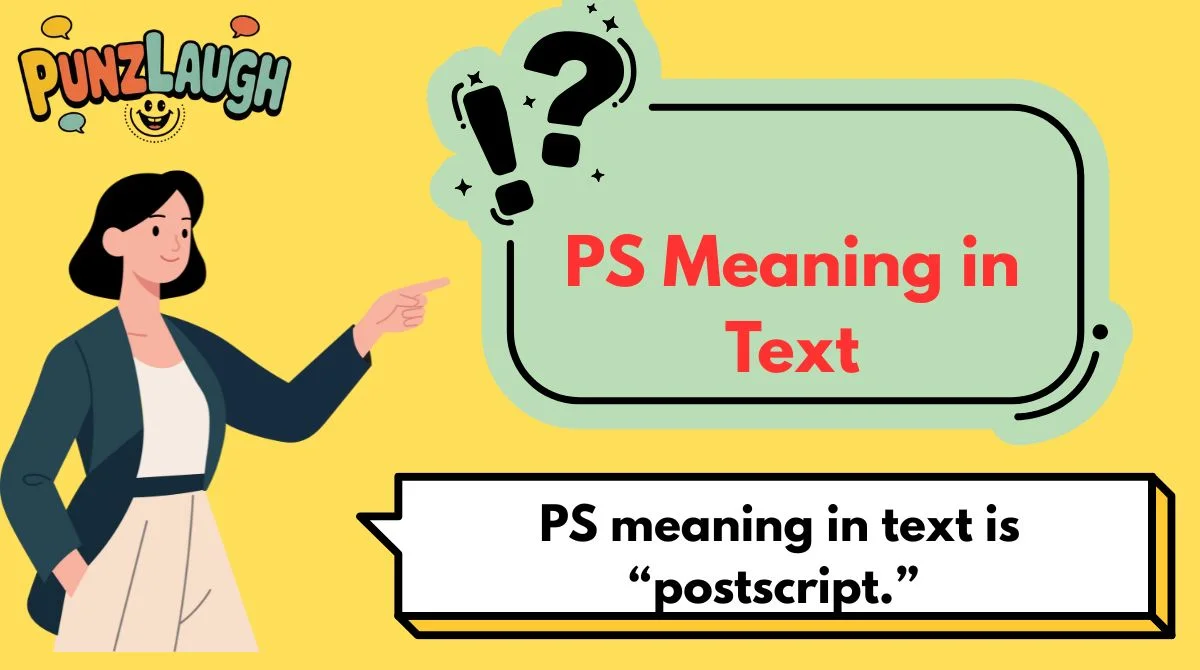
The primary PS meaning in text is “postscript.” It refers to an added thought that comes after the main message has already been written or sent.
Primary Meaning
- PS = Postscript
- Used to add extra information, reminders, or comments after finishing a message
Secondary Meanings (Context-Based)
- A casual way to emphasize something important
- A playful or emotional add-on
- A soft follow-up without rewriting the entire message
Simple Examples
- “I’ll call you later. PS: Don’t forget the documents.”
- “That movie was amazing. PS I’m still thinking about the ending.”
In texting, PS doesn’t always mean the writer forgot something—it can also be used deliberately to sound friendly, thoughtful, or informal.
Background & Origin of PS
PS comes from the Latin phrase “post scriptum,” which means “written after.” Historically, it was used in handwritten letters when the writer remembered something after signing off.
Before digital communication:
- Letters were handwritten
- Editing was difficult
- PS allowed extra notes without rewriting
As emails and texting became common, PS survived because:
- It feels personal and conversational
- It adds emphasis without sounding formal
- People enjoy its casual, human tone
Even in modern digital writing, PS keeps its original purpose—adding a final thought that feels natural and unscripted.
Usage in Different Contexts
Casual Chat & Texting
- Adds humor or warmth
- Often used with emojis or informal language
Social Media
- Highlights bonus thoughts in captions
- Adds personality to posts
Professional Communication
- Used sparingly in emails
- Highlights reminders or follow-ups
Emotional Messages
- Softens serious conversations
- Adds affection or reassurance
Quick Examples
- “Thanks for helping today. PS you’re awesome 😊”
- “Meeting at 3 PM. PS bring your ID.”
Meanings Across Platforms
- Friendly afterthoughts
- Emotional or playful notes
- Caption add-ons
- Emphasis or humor
TikTok
- Used in comments or video text
- Adds context or jokes
Snapchat
- Casual reminders
- Flirty or light messages
Across platforms, PS almost always keeps its informal, friendly tone.
Other Fields Where PS Is Used
Outside texting, PS can have different meanings:
| Field | Meaning |
|---|---|
| Physics | Picosecond |
| Medical | Post-surgery |
| Aviation | Power supply |
| Gaming | PlayStation |
| Education | Problem set |
Context is key—if it’s a chat message, it usually means postscript.
Common Misconceptions & Mistakes
- ❌ Thinking PS is an acronym for slang words
- ❌ Using PS in very formal documents
- ❌ Overusing PS in one message
- ❌ Assuming it always means urgency
PS is casual, not critical—unless the message clearly shows importance.
Similar Terms & Alternatives
| Term | Meaning | Usage |
|---|---|---|
| BTW | By the way | Casual addition |
| FYI | For your information | Informative |
| Note | Extra detail | Neutral |
| Update | New info | Professional |
How to Respond to PS (With Chat Examples)
Respond naturally, based on tone:
- “Got it! Thanks 😊”
- “Haha noted!”
- “I’ll remember 👍”
- “Thanks for the reminder!”
PS usually doesn’t require a long reply—keep it light.
Differences From Similar Words
- PS vs BTW: PS feels more personal
- PS vs FYI: FYI is more informational
- PS vs Note: PS sounds casual and friendly
Relevance in Online Conversations & Dating Apps
On dating apps, PS is often:
- Flirty
- Cute
- Playful
Example:
- “Had fun chatting. PS your smile is contagious 😊”
It adds charm without sounding forced.
Popularity & Trends Over Time
- Stable usage since email era
- Popular in casual messaging
- Frequently searched on Google
- Still relevant in Gen Z and Millennial chats
PS remains timeless because it feels human.
FAQs & Related Search Queries
1. What does PS mean in text messages?
It means postscript, an added thought after the main message.
2. Is PS formal or informal?
Mostly informal, but acceptable in semi-professional emails.
3. Can PS be flirty?
Yes, especially in casual or dating conversations.
4. Does PS mean something urgent?
Not usually—context matters.
5. Is PS still used today?
Yes, widely used across chats, emails, and social media.
Conclusion
Understanding the PS meaning in text helps you read messages more clearly and respond with confidence.
While PS originally came from handwritten letters, it has adapted perfectly to modern digital communication.
Today, it’s used to add reminders, humor, warmth, or emphasis without sounding formal or stiff.
Whether you see it in WhatsApp messages, Instagram captions, emails, or dating apps, PS usually signals an extra thought worth noticing.
Knowing when to use it—and when not to—can make your messages feel more natural and human.
Simple, flexible, and timeless, PS continues to play a small but meaningful role in how we connect online.

I am the pun-slinging mind behind PunZLaugh.com, turning everyday words into weirdly wonderful laughs.I am on a lifelong mission to make your day brighter—one groan-worthy pun at a time.