Last updated on March 28th, 2026 at 05:17 am
The phrase MIA meaning in text is frequently searched because people encounter it in messages,
social media posts, and online conversations but are unsure what it truly means.
Whether someone disappears from a chat, goes quiet on Instagram, or stops replying on a dating app, “MIA” often pops up as a quick explanation.
Its short length and casual tone make it perfect for modern digital communication.
People want clarity because MIA can mean different things depending on context.
Sometimes it is playful, sometimes serious, and other times professional or technical.
Understanding the exact meaning helps avoid confusion or misinterpretation.
In this guide, we will break down what MIA means in text messages,
where it came from, how it is used across platforms, and how to respond naturally.
Everything is explained in simple language, making it easy to understand and apply in real conversations.
Meaning & Definition of MIA
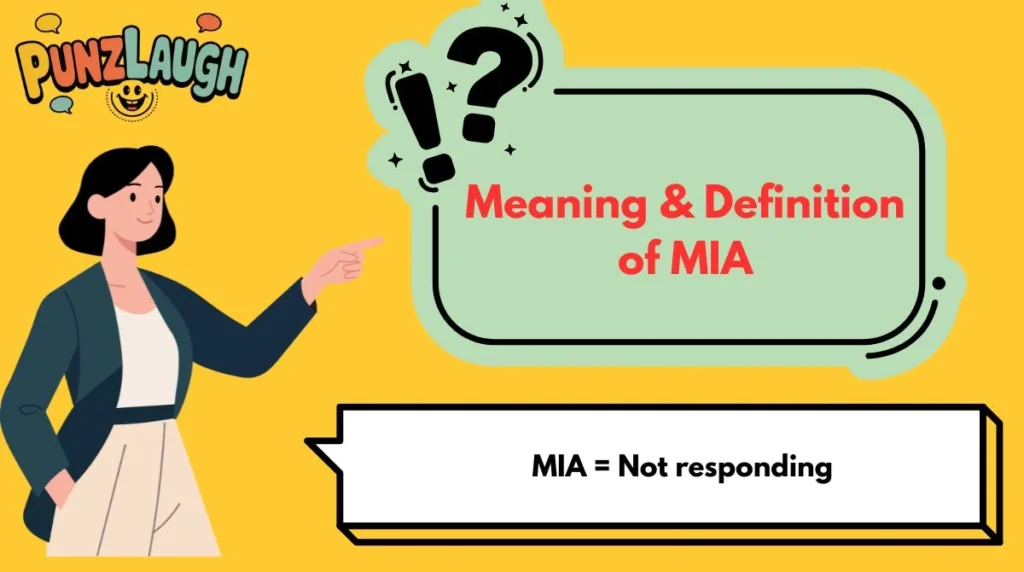
The MIA meaning in text most commonly stands for “Missing In Action.” In everyday digital conversations, it describes someone who is unavailable, unresponsive, or has disappeared for a while.
Primary Meaning
In texting and chat:
- MIA = Not responding
- MIA = Temporarily unavailable
- MIA = Gone without explanation
Example:
- “You’ve been MIA all day, everything okay?”
Secondary Meanings
Depending on tone and situation, MIA can also imply:
- Taking a break from social media
- Being busy with work or life
- Avoiding a conversation intentionally
- Being absent unexpectedly
Quick examples:
- “Sorry I went MIA, had exams.”
- “He’s been MIA since last weekend.”
The key thing to remember is that MIA is usually informal and often neutral, not aggressive. Context and tone decide whether it sounds caring, playful, or annoyed.
Background & Origin of MIA
The term MIA originally comes from the military phrase “Missing In Action.” It was used to describe soldiers whose whereabouts were unknown during combat. Over time, the phrase moved beyond military use and entered everyday language.
As communication became faster and more digital, people shortened phrases to save time. MIA became popular because:
- It is only three letters
- It clearly explains absence
- It sounds casual and modern
By the early days of texting and online chat rooms, MIA was already being used to describe people who stopped replying. Today, it is fully embedded in internet culture and casual speech.
Usage in Different Contexts
Chat & Text Messages
- “Went MIA for a bit, my phone died.”
- “Why did you go MIA last night?”
Social Media
- “Sorry for being MIA, life got busy.”
- “I’ve been MIA from posting lately.”
Professional or Work Contexts
- “Apologies for going MIA during the meeting.”
- “I was MIA due to workload.”
While acceptable in casual work chats, MIA should be avoided in formal emails unless the tone is relaxed.
Meanings Across Platforms
- Usually means delayed replies or silence
- Often followed by an apology
- Refers to not posting stories or replying to DMs
TikTok
- Creators use MIA to explain content breaks
Snapchat
- Means streaks broken or replies delayed
Across platforms, the meaning stays consistent: temporary absence.
Other Fields Where MIA Is Used
MIA has meanings beyond texting:
- Medical: Myocardial Ischemia Area
- Aviation: Miami International Airport (MIA)
- Business: Market Intelligence Analysis
- Physics/Tech: Measurement Interface Adapter
Context is crucial. In text messages, it almost always means Missing In Action, not technical terms.
Common Misconceptions & Mistakes
- Thinking MIA means someone is angry
- Assuming MIA always means intentional ignoring
- Using MIA in very formal writing
- Confusing it with location-based meanings
Remember, MIA does not automatically mean something negative.
Similar Terms & Alternatives
| Term | Meaning |
|---|---|
| AFK | Away from keyboard |
| BRB | Be right back |
| Ghosting | Ignoring intentionally |
| Offline | Not connected |
| Silent | Not replying |
Internal linking suggestion:
- Link to AFK meaning in text
- Link to Ghosting meaning in dating
How to Respond to “MIA”
Here are natural chat-style replies:
- “All good! Just needed a break 🙂”
- “Sorry for being MIA, phone was off 📵”
- “Haha yeah, I disappeared for a bit.”
Choose a tone that fits the situation.
Differences From Similar Words
- MIA vs Ghosting: MIA is usually temporary; ghosting is intentional.
- MIA vs AFK: AFK is short-term; MIA can last longer.
- MIA vs Offline: Offline is technical; MIA is conversational.
Relevance in Online Conversations & Dating Apps
On dating apps, MIA often signals reduced interest or busyness. People use it to:
- Explain delayed replies
- Test interest levels
- Re-enter conversations politely
Example:
- “Sorry I went MIA, still want to talk?”
It helps soften reappearance without awkwardness.
Popularity & Trends Over Time
The MIA meaning in text has remained consistently popular due to:
- Short-form communication
- Social media culture
- Dating app usage
Google search interest spikes during:
- Exam seasons
- Holiday breaks
- Major life events
Its simplicity keeps it relevant.
FAQs
What does MIA mean in texting?
It means Missing In Action, referring to being temporarily unavailable.
Is MIA rude?
No, it is usually neutral and casual.
Does MIA mean ignoring someone?
Not always. Often it just means being busy.
Can I use MIA at work?
Only in informal or internal communication.
Is MIA still used today?
Yes, it is widely used across platforms.
Conclusion
Understanding the MIA meaning in text helps you communicate more clearly and confidently online.
Whether you see it in chats, social media captions, or dating apps, MIA usually signals a temporary absence rather than a negative intention.
Its roots may be serious, but its modern usage is casual and friendly.
By knowing the context, platform, and tone, you can interpret MIA correctly and respond naturally.
As digital conversations continue to evolve, short and expressive terms like MIA remain popular because they save time and explain situations quickly.
Now that you know its meanings across contexts, you can use it accurately without confusion.

I am the pun-slinging mind behind PunZLaugh.com, turning everyday words into weirdly wonderful laughs.I am on a lifelong mission to make your day brighter—one groan-worthy pun at a time.